
Lisa Genova: Still Alice (March 2026)
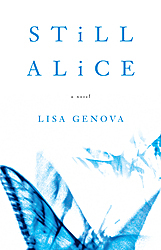
Still Alice tells the story of Alice Howland, a distinguished professor of psychology at Harvard who, at the peak of her career is diagnosed with early onset dementia at the age of fifty.
She had tried to put odd lapses down to perimenopause, stress or tiredness but the signs become unmistakable.
Her husband John, also a Harvard professor in the field of cancer research struggles to come to terms with an illness with no hope of treatment or cure.
The novel is told from the viewpoint of Alice, although it is not a first person narrative, and the reader joins her as she experiences the unwelcome milestones of dementia sufferers. She gets lost in her own neighbourhood, she fails to recognise someone moments after they have been introduced, she greets one of her daughters as a stranger. There are the indignities of not being able to care for herself and being referred to in the third person which is also bewildering.
This was relatable for some of our group who have witnessed it with their own family members.
The form of dementia she has is passed on genetically and they have to inform their three adult children, one of whom is undergoing I.V.F, so that they can be screened.
Alice has to resign from Harvard and her career has been an integral part of her. She says that she misses herself and wonders too about the other important part of her life, her husband and children. Where, she asks herself, does love reside? In the head or in the heart?
There are some touchingly positive moments, when she makes a moving speech about dementia to an audience and she starts a support group with fellow early onset dementia patients. Alice has a wish to be able to realise that she has become a grandmother and still recognise her daughter and this is achieved.
Alice masses sleeping pills and has a plan to commit suicide when her condition becomes worse but she leaves it too late and is too confused to go through with it.
There are some moments of humour, she laughs when she mistakes her pants for her bra, but there are terrifying experiences too. A gaping hole appears in front of the door, trapping her, which is actually just a mat.
This book concerns a caring family in crisis and the decisions and sacrifices that have to be made, particularly for John’s career.
At the end of the novel Alice is still able to feel and appreciate love.
Lisa Genova is a neuroscientist and this is a well-researched and well-written book that is compassionate in its depiction of a dreadful illness.
We gave this excellent debut novel 5/5.