
Art Appreciation – September/October 2026
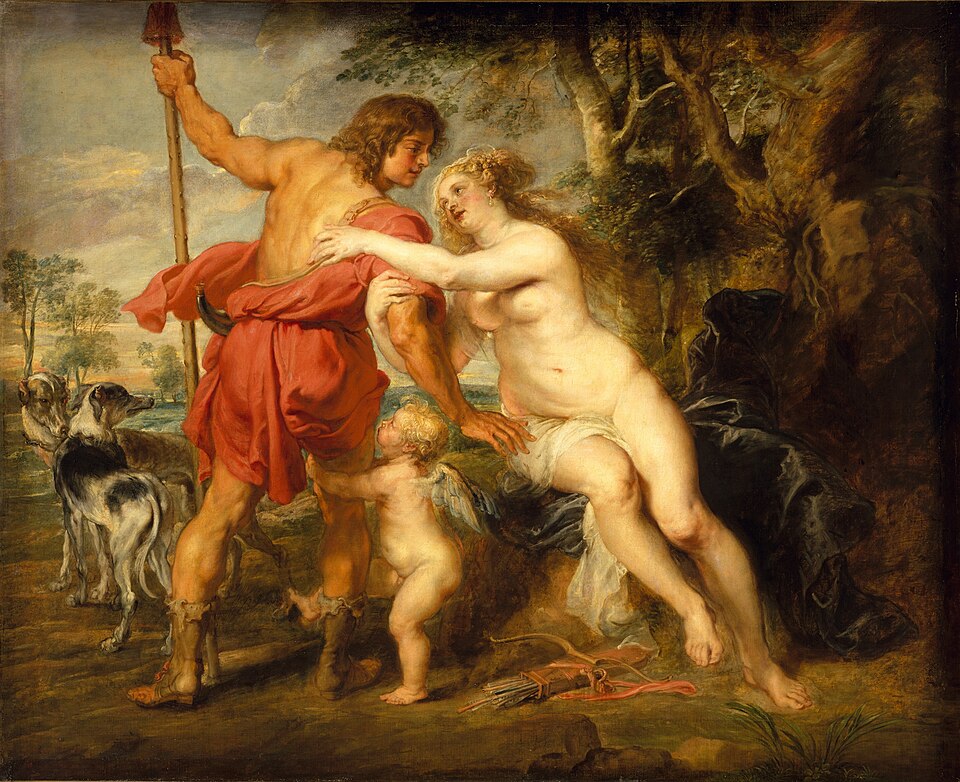
In our September meeting, John gave a presentation on Peter Paul Rubens (1577-1640). He introduced the presentation by reading some extracts from an article on Rubens by the art historian and broadcaster Waldemar Januszczak, entitled ‘Lust, violence, power, compassion and poetry’. Many people today mainly associate Rubens with ‘flesh’ – especially female nudes but also highly muscled, heroic males. Modern observers might regard a Rubenesque woman as unfashionably overweight. Januszczak, however, challenges the idea that all Rubens could paint were fleshy nudes and argues that Rubens could do it all, not just in his painting of women, but in subject matter. Indeed, he rates him as the greatest painter of physical action.
Rubens was born in Antwerp to wealthy parents, and despite his mother’s hopes that he would be a courtier, in his teens he followed his own desires and was apprenticed as an artist. His early upbringing and training in the finer things of life and ease in fashionable, courtly circles served him well throughout his life, as he was able to combine his career as an artist with having close relationships with the rulers of Spain, the Netherlands, France, England and the Holy Roman Empire. Indeed, on many occasions his role in addition to being a court painter, could best be described as a diplomat and, at times, even a spy.
His early training took him to Italy to study the great artists of his age, such as Caravaggio, Titian and Tintoretto. He travelled widely throughout his career, was well versed in the classics and religious subjects, and was able to speak Latin, Greek, French, and Italian as well as the Flemish and Spanish of his native home.
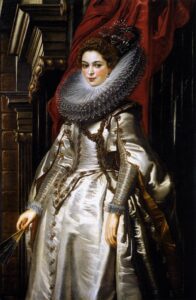
He soon established a reputation as a portrait painter. He clearly enjoyed showing off his skills in painting luxurious fabrics of the fashionable costumes of his weal hy subjects. He also was commissioned to paint large numbers of paintings of religious and mythological subjects. Most of his paintings were on a grand scale, and intended to impress and move his audiences – and often in all likelihood, to titillate.
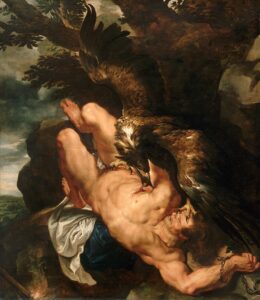
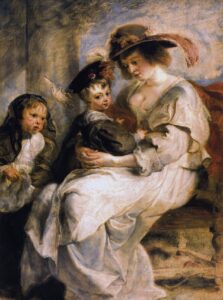
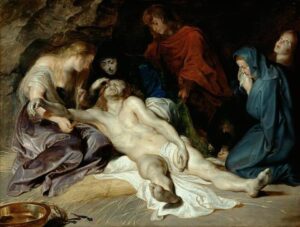
Works such as Prometheus Bound, The Lamentation of Christ, The Descent from the Cross, Tiger, Lion and Leopard Hunt are all full of drama and emotion. He also produced many works which were more intimate and personal, including many of his children and both of his wives. In later life he also painted a number of landscapes close to his home which he clearly loved.
At the beginning of the meeting, most members would have admitted they did not really know Rubens’ work very well, but as they saw more, the group was clearly persuaded by the view of Waldemar Januszczak. He really could do it all.
At the next meeting on Tuesday 13th October, members are invited to choose a work of art on the theme of ‘Cityscapes’ to discuss with the group.
Lynne Vick, Convenor