
Rachel Malik: Miss Boston and Miss Hargreaves (November 2026)
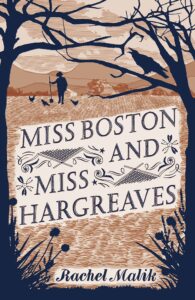 This book has a prologue that immediately grips the reader’s attention. One woman waits at a window overlooking fields. The second woman is leaving Holloway jail having served her sentence for a crime that was obviously sufficiently serious to have made front page headlines as she is concerned that she might be recognised in the street. We wonder what she has done and is the other woman waiting in vain?
Then we are taken back to the beginning of their story in1940 when Elsie Boston is running her Berkshire farm single-handedly and has, reluctantly, requested the assistance of a Land Girl. She has trepidations about sharing her small farmhouse as she is very private and reclusive, with more affinity with animals than with people.
Rene Hargreaves is the Land Girl and they form a friendship which develops into a relationship.
The two become a devoted couple, enjoying the hard work of running the farm and sharing evenings and outings.
Rene, however, is harbouring a secret which she confides to Elsie but someone from her past takes advantage of Rene’s guilt and indebtedness and wreaks havoc on their discreet and contented life.
Their relationship is always delicately written and intimacy is implicit rather explicit so it is all the more distressing when it is exposed to the cruelty and mockery of the press and public at the trial. Elsie is sniggered at when she says “We were rich” meaning not, of course, financial wealth, and much is hinted at about Rene’s Eton bob and slim boyish appearance.
We always appreciate novels that inform us and we learnt about wartime emergency powers over agricultural land that were open to abuse and a small farm, unfairly considered unproductive, could be taken by a neighbour with more money and clout.
Rene also considers what might happen to them as a same sex couple if the years of hard outdoor work and poverty catch up with them and they have to accept living apart in a council care home.
Some found the book rather slow but others thought that the gentle pace was in keeping with their rural life and we enjoyed her descriptions of nature and their ramshackle homes and their days out.
We thought that there were peripheral characters in their lives who could have been explored further and, whilst some of the group liked aspects of the story more than others, a few of us liked the novel in its entirety.
We were intrigued to discover that the book is based on the true story of Rachel Malik’s black sheep maternal grandmother and what the author was able to glean from her research into her life and Elsie’s.
4/5